
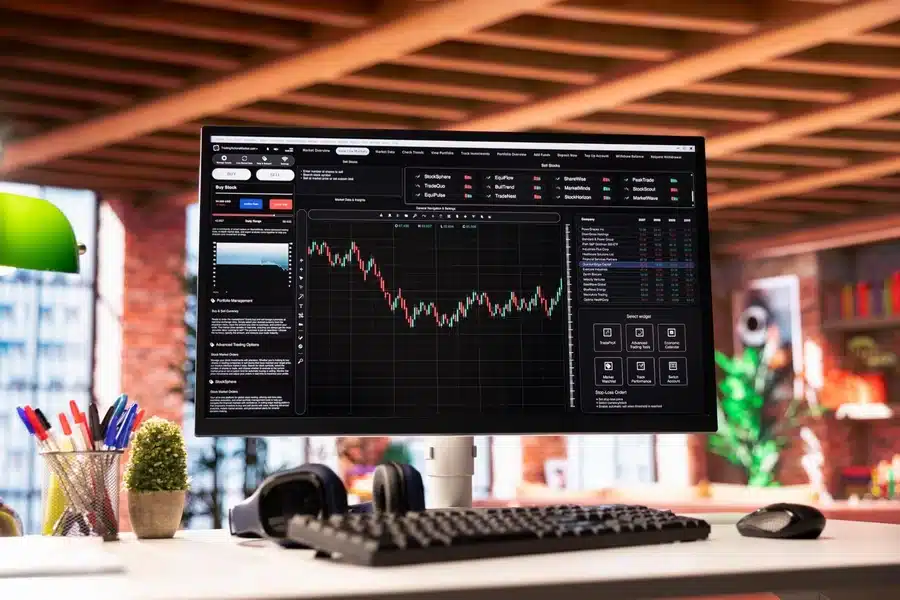
For experienced traders, accessing higher sums of capital without jeopardizing their own funds has become possible through proprietary trading. In India, this idea is implemented through funding companies and specialized platforms that lend money to successful traders in return for a cut of the earnings.
These platforms tend to offer traders live market information, sophisticated algorithms, and sophisticated trading instruments to help make a decision. With a proprietary trading platform, traders use the company’s capital to conduct trades rather than their own money. It is a system that is technology-based. These sites have developed into a large scale within the Indian market, especially when trading became more computerized and more individuals began purchasing stocks.
In the basic structure, traders are granted access to funded accounts after demonstrating their abilities through review procedures. Based on the trader’s track record of success and the company’s risk management procedures, the amount of funds offered might vary from a few lakhs to several crores. Both parties gain from this arrangement since businesses utilize profit-sharing plans to generate revenue, and traders have access to significant funds.
How Prop Funding Companies Function
Using a partnership concept, prop funding companies in India find skilled traders and provide them with money to trade in a range of financial markets. These companies allow traders to seek lucrative possibilities while maintaining stringent risk management procedures to safeguard their invested funds.
An evaluation phase usually precedes the selection process, during which prospective traders are required to exhibit their trading abilities under carefully monitored circumstances. In order to achieve particular profit goals and risk tolerances, this may entail trading with virtual currency or tiny sums of actual capital. Depending on the firm’s needs, the review duration may be a few weeks or many months extended.
The trader is granted access to a funded account with preset trading limits and risk management guidelines after passing the examination. A part of the earnings, often between 50% and 80%, is kept by the trader, while the financing company keeps the remainder as payment for investing the money and assuming the risk.
Depending on their line of work, the majority of respectable prop funding companies in India register as either portfolio management services or investment advisors. Anti-money laundering (AML) rules, know-your-customer (KYC) standards, and other reporting requirements to regulatory bodies must all be followed.
For traders collaborating with prop finance companies, the tax ramifications may be intricate. The profit of trading is not often considered as a capital gain but as the income of the company, and this affects the correct tax rates. To make sure that all the requirements are met, traders are required to maintain a comprehensive account of all the transactions that they have made, and they might require professional assistance in tax matters.
Infrastructure and Tech
High-tech infrastructure is a significant part of the modern proprietary trading platforms, which give the traders a competitive advantage. The automated trading, advanced charting tools, and low-latency connections are typical features that make it possible to execute the strategy effectively.
Indian prop finance companies make large investments in technology to stay competitive. This includes sophisticated risk management systems that track positions in real-time, direct market access (DMA) systems that enable quicker order execution, and extensive reporting tools that analyze performance metrics.
Mobile apps that let traders keep an eye on their positions from a distance, backup systems to guarantee uninterrupted operations, and several data streams from different exchanges are all common components of the technology stack. For traders who would rather use automatic tactics, several companies now provide algorithmic trading features.
Cloud-based solutions are becoming more and more common because they enable businesses to extend their operations effectively and affordably. Attracting and keeping experienced traders who require infrastructure and instruments of the highest caliber depends on this technological base.
Techniques and Strategies for Trading
Depending on the market and their level of experience, traders who deal with prop finance companies in India use a variety of tactics. The flexibility to cancel bets before the market closes and the available leverage make day trading still popular since they lower overnight risk exposure.
Even though arbitrage can be fruitful on numerous trading platforms and market regions, it still requires significant resources and advanced technologies in order to be successful. Some traders use pairs trading or statistical arbitrage strategies, and these seek to benefit from temporary price inefficiencies.
Some of the challenges that accompany the prop trading industry of India include the need to have advanced technology at all times, intense competition, and ambiguous policies. Risks and opportunities related to market volatility also exist, and a delicate balancing act should be adopted between capital protection and profit potential.
For traders and finance companies alike, regulatory clarity is still a major problem. Prop financing arrangements are not specifically regulated, which raises questions regarding ethical corporate practices and regulatory obligations. As regulatory bodies create more thorough frameworks and the industry develops, this position might change.
The increased competition among prop finance companies has improved terms for traders while simultaneously putting more pressure on companies to continue making a profit. Profit-sharing plans, evaluation procedures, and trader support services have all evolved as a result of this competitive climate.
For experienced traders, more chances are created by the increasing retail participation in Indian markets. Higher trading volumes and volatility across different markets offer more opportunities to make money, while better market infrastructure facilitates more complex trading tactics.
Prospects for the future
Since more people are looking for alternatives to conventional job and investment methods, the prop trading sector in India seems poised for sustained expansion. As technology develops, trading tools will probably become more sophisticated and available, which could increase the number of eligible traders.
Initiatives to educate different market participants could contribute to the development of more proficient traders who can satisfy the demands of prop funding firms in India. A positive feedback loop where more skilled traders produce more steady profits and draw in more capital could result from this development.
Conclusion
International opportunities may become available to Indian prop traders through regulatory harmonization and enhanced linkage with global markets. For prosperous businesses and dealers, this development might greatly expand their activities’ scope and size.
As artificial intelligence and machine learning technologies advance, they may also change how prop trading companies assess traders and control risks, which might improve the ecosystem’s overall effectiveness and profitability for all players.


