
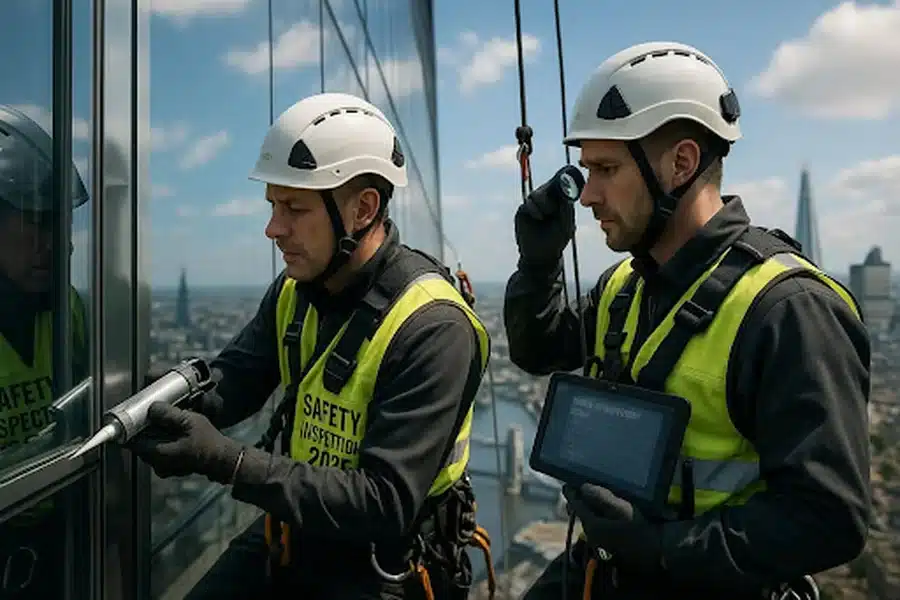
Property managers are always looking for smart ways to keep buildings in good shape without high costs. So, how does rope access lower costs? In short, rope access is fast, safe, and less disruptive than many traditional high-level methods, which cuts spending in a clear way. It speeds up work, reduces gear and labor bills, and keeps disruption low, making it a strong choice for today’s property teams.
If you want to look into this further, especially with rope access companies in the UK, the savings and benefits can be wide-reaching.
In property management, every pound matters and tenant happiness is a priority. Adopting smart maintenance methods is a must. Rope access, often called industrial abseiling, is growing fast as a better option than many standard building maintenance techniques. It brings efficiency and cost control, helping you keep buildings in great shape without overspending.
What Is Rope Access for Property Managers?
Rope access is a way of working at height using ropes, harnesses, and rigging so trained technicians can reach hard-to-access parts of a building. Unlike methods that need large, heavy equipment, rope access is light, quick to set up, and needs little space. It started in climbing and caving and is now a regulated and trusted method for commercial building work.
The method uses two ropes (a main line and a backup line) so technicians can go up, down, and across safely. It works well on high-rise buildings, complex designs, and tight spaces where other setups are impractical or too costly. Property managers can use it for many tasks that keep buildings clean, safe, and in good condition.
How Rope Access Works for Building Maintenance
Modern rope systems use engineered gear with ropes and pulleys to place technicians exactly where they need to be. On structures like smokestacks or cooling towers, gear is set up at the top and technicians descend along the sides. They can then inspect, repair, paint, or clean with control and accuracy. Because the gear is minimal, teams can set up and pack down fast, cutting total project time by a large margin.
Technicians complete strict training and certification with bodies like IRATA (Industrial Rope Access Trade Association). Training covers rope skills, advanced fall protection, and rescue. Safety performance is strong, with a much lower incident rate than many traditional methods. That can also reduce risk-related costs and insurance premiums.
Services Commonly Performed with Rope Access
Rope access suits both routine upkeep and more complex repair work. Typical services include:
- Window cleaning and facade washing
- Gutter work and roof repairs
- External painting and protective coatings
- High-rise glazing installation and repair
- Full masonry inspections and condition surveys
- Bird proofing and pest control
- Lightning protection installation
- Vegetation removal
- Leak detection and waterproofing
Many providers can handle several of these tasks, which keeps logistics simple and lowers admin costs for property managers.
Rope Access vs. Traditional Access Methods
For commercial building upkeep, managers often choose between scaffolding, elevated work platforms (EWPs), and crane hires. These can work but often add cost, time, and disruption. Rope access offers another way that often beats these on speed, price, and impact on daily activity.
Choosing the right method comes down to cost, time, access needs, and building use. Knowing how rope access differs helps managers make better choices that support budgets and smooth operations kaiyo.
Cost Comparison: Rope Access, Scaffolding, and Cradles
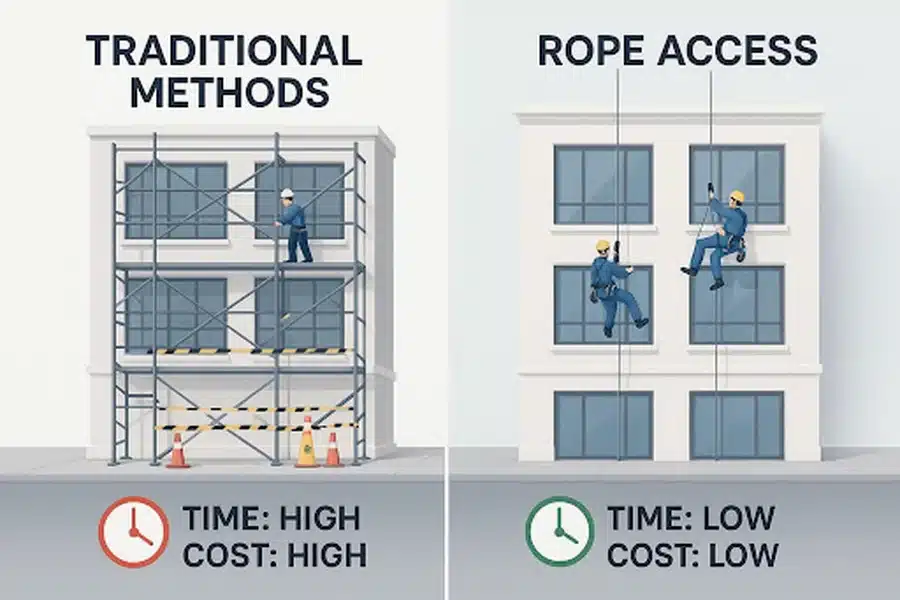
Rope access is cost-effective. Scaffolding can be expensive due to labor for setup and dismantling, gear hire, transport, and longer project times. Access alone can take 20% to 50% of the total project cost. Rope access avoids bulky gear and large ground areas, which cuts setup and equipment spend a lot.
Many projects save up to 40% with rope access compared to scaffolding and EWPs. A rope access setup often takes about 1 hour, while scaffolding can take up to 12 hours. Total setup and pack-up for rope access averages around 2 hours, compared with about 32 hours for scaffolding or 14 hours for lifts. Faster processes mean lower labor and total project costs.
| Access method | Setup + pack-up time | Access cost share | Potential saving with rope access |
| Rope access | ~2 hours | Low | – |
| Scaffolding | ~32 hours | 20-50% of project | Up to 40% |
| Elevated work platforms (lifts) | ~14 hours | High rental + transport | Up to 40% |
Time Efficiency for High-Rise and Complex Sites
Time is money, and short project times matter. Rope access cuts the time needed to complete many tasks. Scaffolding may take days or weeks to erect and remove. Rope systems are light and quick, so work often starts the same day the team arrives. That means less downtime for the building and the people inside it.
Rope access can reduce timelines by 30-50%. Average working time is around 10 hours for rope access versus about 32 hours for scaffolding on similar jobs. This helps on towers and complex structures where traditional methods may struggle or need extra steps to work around overhangs, spires, or narrow facades.
Key Ways Rope Access Reduces Maintenance Costs
Using rope access can lower many types of costs, not just the first quote for access. By improving planning, staffing, and site impact, it supports long-term savings and smoother day-to-day operations. Managers focused on stretching their budget will see gains add up over time.
From lower upfront spend to reduced running costs, rope access offers a clear way to cheaper building care. Here are the main ways it helps cut expenses.
Lower Setup and Equipment Expenses
Rope access needs minimal gear. You avoid large rentals like cranes and heavy scaffolds, plus the transport and build time that go with them. Lightweight, portable equipment reduces hire bills and simplifies logistics.
With fewer parts to manage and small staging needs, you also cut permits and site coordination. This simple approach removes many hidden costs found in traditional methods. Using less heavy machinery can also lower fuel use and emissions.
Minimized Labor Costs and Staffing Needs
Rope access usually runs with smaller teams. That means lower labor costs. These technicians are highly trained, so they can finish tasks faster and with precision.
Setup and takedown often take about one hour each, which reduces idle time and hourly spend. Shorter project durations and efficient staffing deliver labor savings of around 30-50%, without lowering work quality.
Reduced Project Duration and Downtime
Rope access teams can mobilize and demobilize quickly, often within hours. Faster completion means less time that areas are out of use. For commercial sites where business has to keep moving, less downtime protects revenue.
Quick turnarounds also make scheduling easier. Managers can plan work around busy periods and still get needed maintenance done without long delays.
Less Disruption to Tenants and Business Operations
Another big saving comes from reduced disruption. Scaffolding can block entrances, create noise, impact privacy, and take up ground space. This can upset tenants and affect businesses.
Rope access keeps the footprint small. Technicians work quietly on ropes without blocking paths, windows, or doors. This is helpful for offices, schools, hospitals, and residential blocks where daily life must continue. A smoother experience helps keep tenants happy and avoids indirect costs tied to complaints and delays.
Boosting Long-Term Value for Property Managers
Beyond short-term savings, rope access plays a key role in improving long-term asset value. Good property management means planning ahead so assets stay protected and attractive over time. Rope access helps by making frequent inspections and timely repairs easier to carry out.
Spending on efficient maintenance now can prevent bigger bills later, so a building stays a strong asset for years. Here is how rope access supports that goal.
Proactive Maintenance and Reduced Future Repair Costs
Regular inspections every 6 to 12 months help catch small issues early so they do not turn into expensive repairs. Waiting until something fails can cost 3 to 5 times more than staying on top of minor fixes.
Rope access makes it simple to check problem areas and carry out small repairs right away, such as sealing, minor facade fixes, or early leak points. This approach cuts emergency call-outs and extends the life of building parts.
Improved Asset Lifespan and Building Value
Consistent care extends the useful life of a building. It helps both the look and the structure. For example, keeping glazing systems in good shape can improve energy performance and reduce bills.
Regular professional upkeep also supports tenant satisfaction, which can raise rents and lower vacancy. Well-cared-for buildings hold or grow their value. Clean facades and sound structures help valuations and support better returns for owners.
Making the Business Case for Rope Access
To build a strong case for any maintenance method, managers need clear financial and operational gains. Rope access has a solid track record for safety, speed, and savings. It is a better approach that fits modern asset management.
Switching to rope access may feel like a big change, but long-term gains usually outweigh early concerns. Knowing how to add it into your plan and explain the benefits will help roll it out well.
Practical Tips for Property Managers Implementing Rope Access
- Set a planned maintenance program instead of relying on reactive repairs.
- Schedule routine inspections and upkeep to spot issues early.
- Work with certified rope access technicians who have the right trade skills (e.g., glazing, facade repair).
- Document all maintenance to build a full history of building performance.
- Coordinate rope access work with other building systems to avoid clashes and save time.
- Request detailed inspection reports to track the building envelope over time and guide decisions.
- Create a multi-year plan that fits with capital spending so benefits last and asset care stays on track.
Frequently Asked Questions
Property managers often ask how rope access affects budgets. The safety and speed are clear, but cost is always central. Answering common questions helps show the value and supports better planning.
Knowing the cost drivers and the savings compared to other methods helps teams bring rope access into their operations with confidence.
Is Rope Access Expensive Compared to Other Methods?
For very small, one-off tasks, rope access pricing can be similar to or slightly higher than some options. But for full projects, rope access is often cheaper overall. It removes the need for scaffolding and heavy machines, which are major cost drivers. Many teams see up to 40% savings versus scaffolding and lifts.
Lower labor hours, minimal rental gear, and shorter durations all reduce the total cost. Less disruption to tenants and business also protects income. Strong safety records can help with insurance. In the end, rope access is a smart, efficient, and budget-friendly choice for managers who want to get the most from their maintenance spend.
Building maintenance needs methods that are effective, sustainable, and cost-conscious. Rope access, with its mix of safety, flexibility, and savings, fits that need well. As cities grow taller, maintaining high-rise and complex sites will get harder. Rope access offers a forward-looking way to stay ahead of wear, keep structures sound, and improve the look of buildings without high costs. The field keeps moving, with lighter gear and drone support speeding up work and promising even more gains. Choosing rope access is an investment in a building’s lifespan, smooth operations, and market value that aligns with responsible property management today.


